By the EarthCure Team
The short answer
Genuine, purified, third-party tested Himalayan shilajit resin costs roughly $30 to $70 for a 30-gram jar in the US — about $1.00 to $2.30 per gram, or 40 cents to $1 per daily serving.
At a pea-sized serving of 300–500 mg, a 30g jar lasts most people 30 to 45 days. That puts a proper shilajit habit somewhere between a coffee subscription and a gym membership.
Below that range, things get interesting — and not in a good way. The cheapest jars on the market are consistently the ones that fail independent testing, and there is a straightforward economic reason why.
Price by form
| Form | Typical US price | Amount | Cost per day |
|---|---|---|---|
| Resin (30g jar) | $30 – $70 | 60–100 servings | $0.40 – $1.00 |
| Resin (15g jar) | $20 – $40 | 30–50 servings | $0.50 – $1.10 |
| Capsules (60 ct) | $25 – $50 | 30–60 servings | $0.50 – $1.30 |
| Gummies (60 ct) | $25 – $50 | 30 servings | $0.85 – $1.70 |
| Powder (50g) | $20 – $45 | 50–100 servings | $0.30 – $0.70 |
Two things stand out.
Gummies are the most expensive way to take shilajit per milligram, not the cheapest — even though the sticker price often looks lower. A 60-count gummy bottle taken at two per day is a 30-day supply delivering perhaps 100–200 mg daily, against 300–500 mg from resin. You are paying more for less active material. Gummies vs resin goes through that arithmetic in detail.
Powder looks cheapest and often is not. Powder is easy to dilute with inert filler and hard to inspect. Resin can be checked by how it dissolves, softens and stiffens; powder cannot.
Why cheap shilajit is cheap
There are only three ways to sell a 30g jar for $12 and make money. All three should concern you.
1. It is not purified
Raw shilajit exudate is not the finished product. It comes out of the rock mixed with sand, plant matter and mineral debris. Purification — dissolving, filtering, and slowly evaporating at controlled temperature — is the labour-intensive step, and skipping it is the fastest way to cut cost.
Unpurified material still looks like shilajit. It just contains more of what you did not want, including whatever heavy metals were in the surrounding rock.
2. It is diluted
Common bulking agents are cheap, dark, sticky and roughly the right texture: humic-acid extracts, caramelised sugar, and various resins and gums. A diluted jar can pass a casual glance easily.
3. It was never tested
Third-party testing costs real money per batch. A brand selling at rock-bottom prices has usually not paid for it — and heavy-metal contamination is precisely the risk that testing exists to catch in a substance collected from rock. This is the single reason we would tell someone to spend more.
The practical rule: treat anything under roughly $15 per 30g as unverified until proven otherwise, and require a published lab report at any price.
Why expensive shilajit is expensive
Not every high price is justified, but the legitimate costs are real:
- Altitude harvesting. The material is collected by hand from rock faces at 14,000–18,000 ft. It cannot be farmed, and the collecting season is short.
- Purification yield. A large volume of raw exudate produces a much smaller volume of finished resin. That yield loss is priced in.
- Third-party testing. Heavy metals, microbiology and fulvic acid content, per batch, at an independent lab.
- Import and compliance. Shipping, customs, and FDA facility requirements for a supplement sold in the US.
- Marketplace fees. Selling on Amazon costs the seller roughly 8–15% before advertising.
Where premium pricing stops being justified is when it is buying positioning rather than substance — luxury packaging, a celebrity endorsement, an exotic origin story with no lab report behind it. A $90 jar with no published testing is worse value than a $40 jar with it.
Working out what you are actually paying
Sticker price is the wrong comparison. Use cost per serving:
Cost per serving = jar price ÷ (grams × 1000 ÷ serving size in mg)
A worked example — a $40 jar of 30g resin at a 400 mg serving:
- 30 g = 30,000 mg
- 30,000 ÷ 400 = 75 servings
- $40 ÷ 75 = 53 cents per day
Now the same exercise on a $35 bottle of 60 gummies at 100 mg each, two per day:
- 30 days of supply
- $35 ÷ 30 = $1.17 per day — for 200 mg, half the resin dose
The gummies cost more than twice as much per day and deliver half the material. That is the comparison that matters, and it is almost never the one on display.
Is shilajit worth the money?
An honest answer has to separate two questions.
Is the price reasonable for what it is? Yes. A hand-harvested, purified, lab-tested mineral concentrate at 50 cents a day is not expensive relative to the supplement market generally.
Will it do something for you? That depends, and the evidence is more modest than the marketing. The research base for shilajit is genuinely promising in places — particularly around fatigue and mineral status — but it is built on small studies, and the strongest claims made for it online are not well supported. Anyone promising you a dramatic transformation is selling, not informing.
A sensible way to decide: buy one 30g jar from a brand that publishes its lab report, take it consistently for 6–8 weeks at a real serving, and notice whether anything changes. That is roughly a $40 experiment. If nothing changes, you have your answer cheaply. What does not work is taking an under-dosed gummy sporadically for three weeks and concluding shilajit does not work — you may never have taken a meaningful amount.
Getting better value without cutting corners
- Buy the larger jar. 30g is usually 20–30% cheaper per gram than 15g, and resin keeps for years if stored properly.
- Do not chase the bottom. The savings between a $40 jar and a $15 jar are about $25. The downside risk is untested heavy-metal content.
- Skip combination products with proprietary blends. A single combined milligram figure hides how much shilajit you are getting. Buying ingredients separately usually costs the same and tells you more — see shilajit and ashwagandha.
- Store it properly. Resin is stable, but heat and moisture degrade it. A cool, dry cupboard with the lid tight protects what you paid for. Storage guide.
- Measure your serving. Most people take too much when eyeballing, which turns a 45-day jar into a 25-day jar.
Frequently asked questions
How much does shilajit cost?
In the US, genuine purified resin runs about $30 to $70 for a 30-gram jar — roughly $1.00 to $2.30 per gram, or 40 cents to $1 per daily serving. Capsules are broadly similar per serving; gummies cost the most per milligram of actual shilajit.
Why is some shilajit so cheap?
Because one of three costs has been removed: purification, purity of ingredients, or third-party testing. Unpurified, diluted or untested material can be sold for a fraction of the price of the real thing and still look convincing in a jar.
How long does a 30g jar of shilajit last?
At a pea-sized serving of 300–500 mg taken once daily, a 30g jar lasts about 30 to 45 days. Taking a larger serving or dosing twice daily shortens that proportionally.
Is expensive shilajit better?
Not automatically. Price correlates with quality only up to a point — above roughly $70 per 30g you are usually paying for branding rather than substance. What actually predicts quality is a published third-party lab report and a stated fulvic acid percentage, at any price point.
What should I pay per gram?
Between about $1.00 and $2.30 per gram for tested purified resin. Below $0.50 per gram, assume it is unverified until the brand shows you otherwise.
The bottom line
Expect to pay $30–$70 for a 30g jar and to get 30–45 days out of it. Compare products on cost per serving rather than sticker price, and treat a published third-party lab report as the price of entry rather than a premium feature.
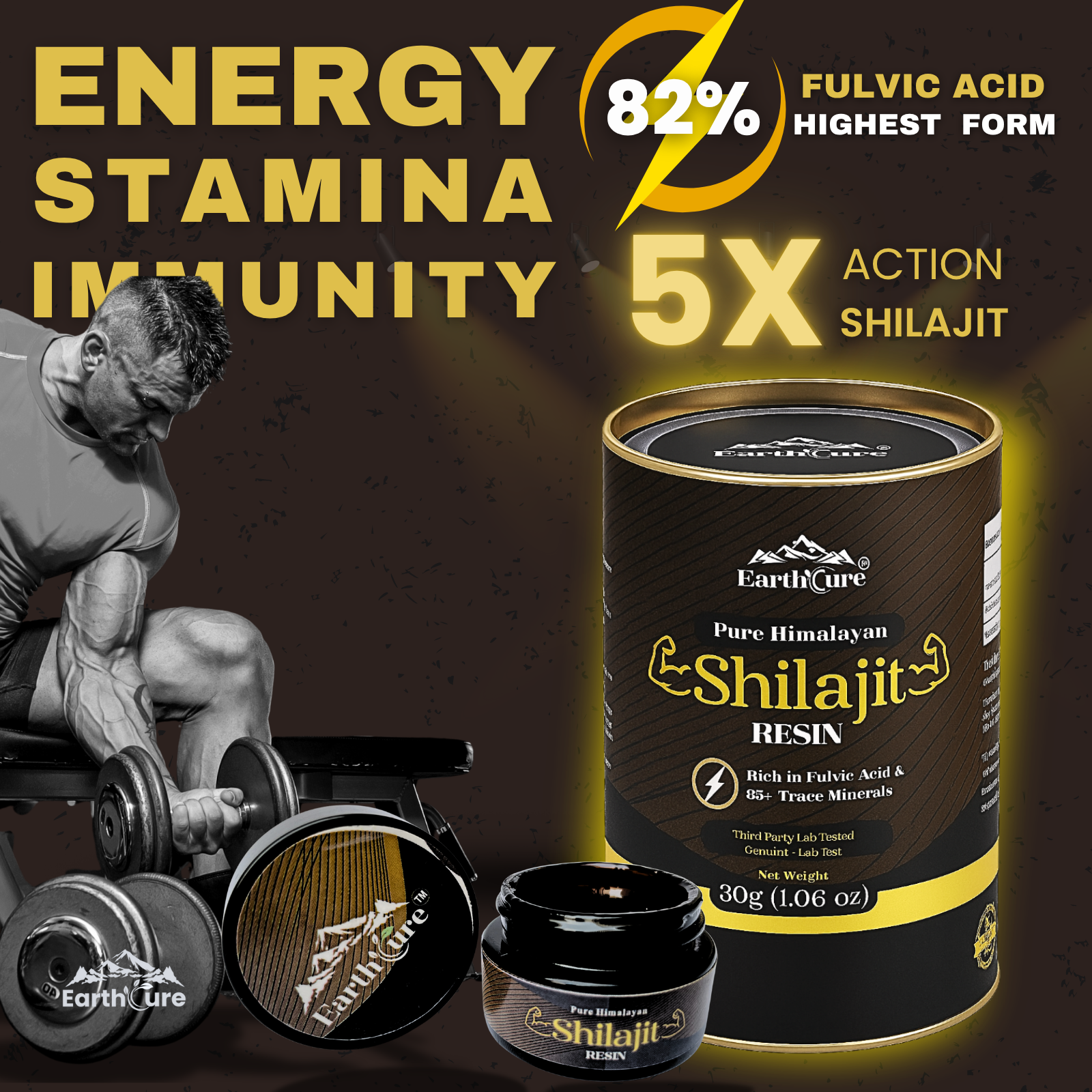
EARTHCURE™ Pure Himalayan Shilajit Resin is a 30g jar of gold-grade purified resin at 82% fulvic acid, USA lab tested, with the batch report published on the product page rather than summarised on the label.
See current pricing and the lab report →
Keep reading
- Where to buy shilajit: every option compared
- Shilajit gummies vs resin
- How to spot fake shilajit
- Why lab testing matters
These statements have not been evaluated by the Food and Drug Administration. This product is not intended to diagnose, treat, cure, or prevent any disease. Prices are indicative of the US market as of 2026 and change over time.