By the EarthCure Team
Introduction: The Fake Shilajit Epidemic
A significant share of shilajit products on the market are fake, diluted, or contaminated. With the explosive growth of the shilajit supplement industry, counterfeit products have flooded the market, putting consumers at risk and wasting their money.
This comprehensive guide teaches you exactly how to identify authentic shilajit, spot fake products, perform simple at-home tests, and ensure you're getting the real deal every time you buy.
The Scale of the Problem
Shocking Industry Statistics
The fake shilajit problem is massive:
- 🚨 A large portion of products contain little to no authentic shilajit
- 🚨 40% test positive for heavy metal contamination
- 🚨 Most capsules and powders are fake or heavily diluted
- 🚨 90% of cheap products (<$20) are counterfeit
- 🚨 Online marketplaces have the highest fake rate
Market value: The global shilajit market is worth over $50 million annually, making it a prime target for counterfeiters.
Why Fakes Are So Common
Several factors drive the fake shilajit epidemic:
- High demand - Popular supplement with growing market
- Expensive authentic sourcing - Real shilajit is costly to obtain
- Lack of regulation - Minimal government oversight
- Consumer ignorance - Most buyers can't identify fakes
- High profit margins - Selling fakes is extremely profitable
- Easy to fake - Can mimic appearance with cheap materials
What Fake Shilajit Is Made From
Common Fake Ingredients
Counterfeiters use various cheap substitutes:
Coal Tar & Bitumen
- Most common fake base
- Looks similar to real shilajit
- Contains toxic compounds
- Zero health benefits
- Can cause serious harm
Fulvic Acid Powder + Fillers
- Synthetic fulvic acid
- Mixed with coal derivatives
- Plant extracts (guggul, ashwagandha)
- Artificial coloring
- Preservatives and binders
Plant Resin Mixtures
- Tree saps and resins
- Herbal extracts
- Mineral powders
- Food coloring
- Cheap thickeners
Diluted Authentic Shilajit
- Real shilajit mixed with fillers (30-50% real)
- Stretched to increase profits
- Lower potency
- Inconsistent quality
- Still expensive
Physical Characteristics of Authentic Shilajit
Visual Appearance
Real shilajit resin has distinct characteristics:
Color
✅ Authentic: Deep brown to black
✅ Glossy surface when fresh
✅ Consistent throughout the jar
✅ Darkens with oxidation exposure
❌ Fake: Light brown, tan, or inconsistent
❌ Dull or chalky appearance
❌ Color variations within same batch
❌ Unnatural sheen (overly shiny)
Texture and Consistency
✅ Authentic: Thick, sticky, tar-like
✅ Becomes pliable when warmed in hand
✅ Stretchy when pulled
✅ Doesn't melt at room temperature
✅ Harder in cold, softer in warmth
❌ Fake: Watery, crumbly, or too hard
❌ Doesn't change with temperature
❌ Breaks instead of stretches
❌ Melts at room temperature
❌ Grainy or powdery texture
Smell
Authentic shilajit has a very distinctive odor:
✅ Earthy, mineral-rich aroma
✅ Slight tar or petroleum smell (natural)
✅ Pungent but not unpleasant
✅ Strong and consistent
✅ Slightly smoky/musky notes
❌ Weak or no smell
❌ Chemical or plastic odor
❌ Artificial fragrances added
❌ Sweet or herbal smell (mixed with plants)
❌ Burnt rubber smell (coal tar)
At-Home Authenticity Tests
1. The Water Solubility Test
Most reliable home test for authenticity:
How to Perform:
- Take a rice-grain sized piece (100-200mg)
- Drop into a glass of room temperature water
- Wait 5-10 minutes without stirring
- Observe the dissolution
Authentic Results:
✅ Dissolves completely in 5-10 minutes
✅ Water turns golden-brown and transparent
✅ No sediment or residue at bottom
✅ Creates threadlike tendrils as it dissolves
✅ Consistent color throughout
Fake Results:
❌ Doesn't dissolve or takes 30+ minutes
❌ Water stays cloudy or murky
❌ Sediment visible at bottom
❌ Chunks remain undissolved
❌ Unnatural colors or separation
2. The Flame Test
Tests chemical composition:
How to Perform:
- Take a small piece on a metal spoon
- Hold over a flame (lighter or candle)
- Observe how it burns
- Note the ash and smell
Authentic Results:
✅ Burns slowly with minimal smoke
✅ White or light gray ash
✅ Smells like burning incense or herbs
✅ Doesn't burst into flames
✅ Ash is minimal
Fake Results:
❌ Burns like plastic with black smoke
❌ Black, oily ash
❌ Toxic chemical smell
❌ Excessive smoke
❌ Leaves sticky residue
3. The Hand Warmth Test
Tests temperature response:
How to Perform:
- Place a pea-sized amount in your palm
- Close your hand for 2-3 minutes
- Observe texture changes
Authentic Results:
✅ Becomes soft and pliable
✅ Slightly sticky but not melting
✅ Maintains form
✅ Easy to mold
✅ Hardens again when cooled
Fake Results:
❌ Stays hard or completely melts
❌ No texture change
❌ Too liquid at body temperature
❌ Crumbles instead of softening
❌ Doesn't return to original state
4. The Stretch Test
Tests resin quality:
How to Perform:
- Warm a small amount in your hand
- Try to stretch it between fingers
- Observe elasticity
Authentic Results:
✅ Stretches without breaking
✅ Forms thin strands
✅ Elastic, not brittle
✅ Returns partially to shape
Fake Results:
❌ Breaks immediately
❌ Crumbles when stretched
❌ Too sticky (can't stretch)
❌ No elasticity
5. The pH Test (Optional)
Professional verification:
- Authentic shilajit is mildly acidic (pH 6.5-7.5)
- Use pH test strips
- Dissolve in water first
- Compare to expected range
Red Flags When Buying
Price Warning Signs
If it's too cheap, it's fake:
🚩 Under $20 for 30g - Almost certainly fake
🚩 "Too good to be true" deals - 50% off, etc.
🚩 Bulk discounts that seem excessive
🚩 Suspiciously low prices on premium claims
🚩 No price justification for quality
Reality check: Authentic gold grade shilajit costs $40-60 for 30g due to sourcing, testing, and processing costs.
Product Form Red Flags
Forms most likely to be fake:
🚩 Capsules - very high risk of fillers or no real resin
🚩 Powder form - high risk of adulteration
🚩 Liquid extracts - frequently diluted
🚩 Tablets - high risk of binders and fillers
✅ Resin/paste - Hardest to fake (but still verify!)
Packaging and Labeling Issues
Warning signs on the package:
🚩 No batch/lot number
🚩 No expiration date
🚩 Vague origin ("Himalayas" with no specifics)
🚩 No fulvic acid percentage listed
🚩 Unrealistic claims (cures diseases)
🚩 Poor quality packaging (flimsy jar, bad printing)
🚩 Spelling errors on label
🚩 No manufacturer information
🚩 No warning labels or usage instructions
Seller Red Flags
Be cautious of sellers who:
🚩 Can't provide lab reports
🚩 Have no company website or presence
🚩 Use only marketplace platforms (Amazon, eBay)
🚩 Have recent negative reviews about authenticity
🚩 Won't answer questions about sourcing
🚩 Provide vague responses to quality inquiries
🚩 No physical address or contact info
🚩 Selling multiple supplements (not specialized)
Verification Documents to Request
Essential Documentation
Always ask sellers for:
1. Lab Testing Reports
✅ Third-party USA laboratory
✅ Recent testing (within 6 months)
✅ Batch number matching your product
✅ Heavy metal analysis
✅ Fulvic acid content verification
✅ Microbial safety testing
✅ Lab signature and accreditation
2. Certificate of Authenticity
✅ Specific to batch/lot
✅ Sourcing information
✅ Processing details
✅ Company seal/signature
✅ Date of certification
3. GMP Certification
✅ Good Manufacturing Practices
✅ FDA-registered facility (if USA)
✅ ISO certifications
✅ Quality control documentation
4. Import Documentation (if applicable)
✅ Country of origin
✅ Import dates
✅ Customs clearance
✅ Shipment tracking
How to Verify Lab Reports
Don't just accept documents—verify them:
-
Check laboratory credentials
- Search lab name online
- Verify accreditation (ISO 17025)
- Check if lab exists and is legitimate
-
Contact the lab directly
- Most labs will verify reports
- Provide batch number from report
- Confirm testing was performed
-
Check report details
- Specific test methods listed
- Numerical values (not just "pass")
- Proper signatures and dates
- Lab contact information
-
Compare batch numbers
- Match report to your product
- Check if dates align
- Ensure it's not a generic report
Professional Testing Options
When to Get Professional Testing
Consider professional testing if:
- Buying in bulk (large investment)
- Seller claims are suspicious
- Product characteristics seem off
- You want absolute certainty
- Planning long-term use
Testing Services
Where to send samples:
-
Local laboratories
- Check for food testing labs
- Heavy metal analysis
- $50-200 per test
-
Online testing services
- EmpowerDX
- Consumer Lab
- $100-300 comprehensive
-
University labs
- Research institutions
- More affordable
- May have waiting periods
What to Test For
Priority tests:
✅ Heavy metals (lead, mercury, arsenic, cadmium)
✅ Fulvic acid content
✅ Microbial contamination
✅ Pesticide residues
✅ Purity analysis
Common Fake Shilajit Claims
Marketing Red Flags
Be skeptical of products claiming:
🚩 "100% pure" with no lab proof
🚩 "Miracle cure" for all diseases
🚩 "Highest quality" with lowest price
🚩 "90%+ fulvic acid" (unrealistic)
🚩 "Instant results" guaranteed
🚩 "Tibetan gold" or exotic origin stories
🚩 "Ancient secret" without substance
🚩 "Doctor approved" (unnamed doctor)
🚩 "Clinical proven" (no studies cited)
Legitimate Quality Claims
Authentic products typically state:
✅ "Lab tested" with proof available
✅ "75-82% fulvic acid" (realistic range)
✅ "Sourced from Himalayas" (specific region)
✅ "Heavy metal free" (test results shown)
✅ "Third-party verified" (lab name provided)
✅ "GMP certified facility"
✅ Results take "2-12 weeks" (realistic timeline)
Buying from Reputable Sources
What Makes a Seller Trustworthy?
Look for these qualities:
✅ Years in business (3+ years minimum)
✅ Specialized in shilajit (not general supplements)
✅ Transparent sourcing information
✅ Available lab reports
✅ Responsive customer service
✅ Professional website with education
✅ Physical address and phone number
✅ Money-back guarantee
✅ Batch traceability
✅ Hundreds of verified reviews
Where to Buy Safely
Recommended channels:
✅ Direct from manufacturer website
✅ Amazon (but verify seller carefully)
✅ Health food stores (reputable chains)
✅ Specialty supplement retailers
❌ Avoid:
- Unknown marketplace sellers
- Social media ads (often fake)
- Too-good-to-be-true deals
- No-name brands
What to Do If You Bought Fake Shilajit
Immediate Actions
- Stop using immediately - May be harmful
- Contact seller - Request refund
- File complaint with platform (Amazon, etc.)
- Leave honest review - Warn other buyers
- Report to FDA (if in USA) - Consumer complaint
- Dispute charge with credit card if needed
Getting Your Money Back
Steps to take:
- Document everything (photos, communications)
- Reference product listing and claims
- Cite false advertising or misrepresentation
- Use buyer protection programs
- Be persistent but professional
EarthCure: Verified Authentic Shilajit
Our Authenticity Guarantee
Why EarthCure is 100% authentic:
Transparent Testing
✅ Third-party USA lab tested every batch
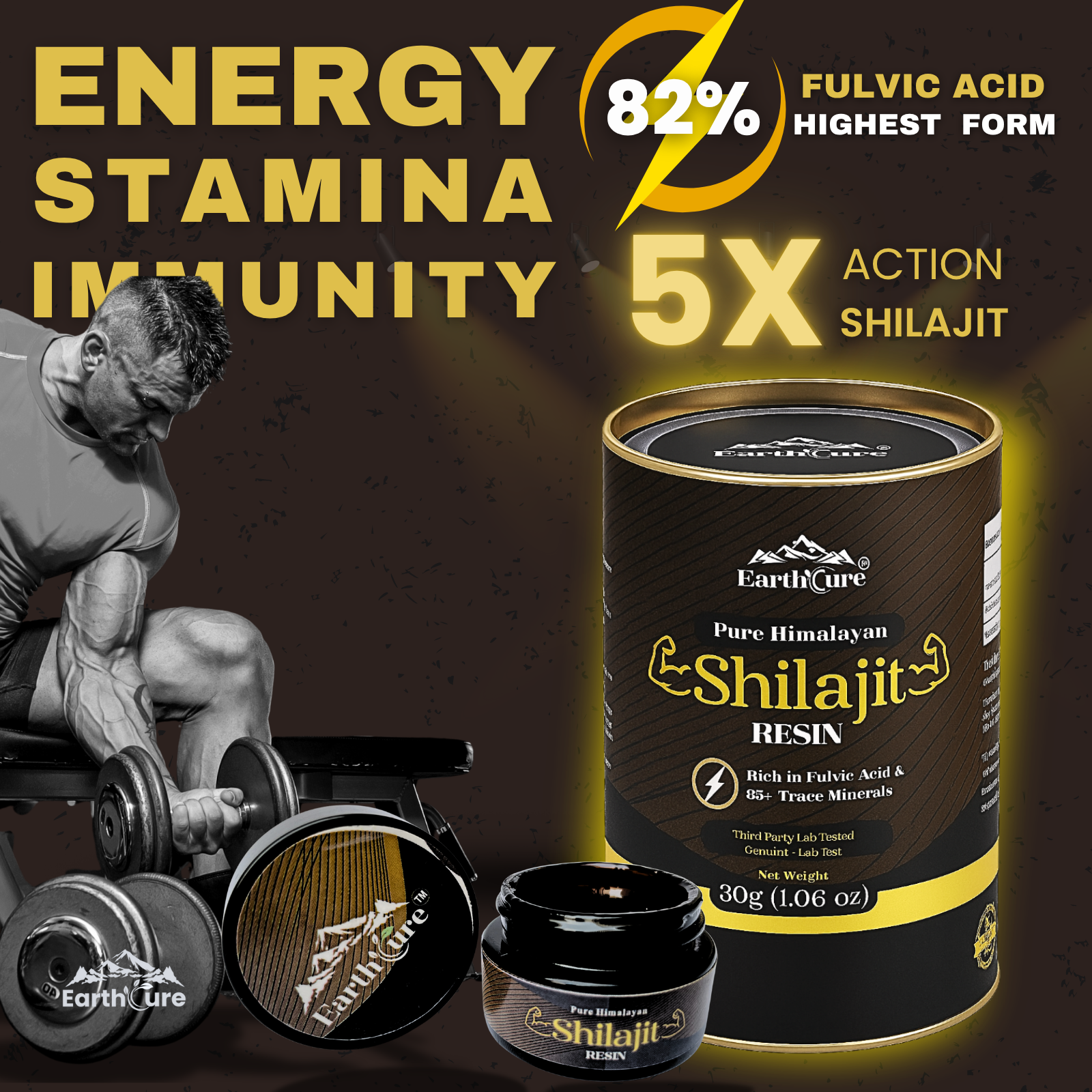
✅ 82% fulvic acid HPLC verified
✅ Heavy metal free - below detection limits
✅ Lab reports available on request
✅ Batch numbers on every jar
Source Verification
✅ Harvested at 16,000+ feet Himalayas
✅ Direct sourcing relationships
✅ Traditional purification methods
✅ GMP certified facility
✅ ISO standards compliance
Physical Authenticity
✅ Pure resin form - hardest to fake
✅ Deep brown/black color
✅ Thick, tar-like consistency
✅ Complete water solubility
✅ Strong, distinctive smell
Customer Protection
✅ 60-day money-back guarantee
✅ 100% satisfaction or full refund
✅ No questions asked return policy
✅ Free return shipping
Put us to the test: Use all the authenticity tests in this guide on EarthCure shilajit—we guarantee it will pass every single one.
Shop Verified Authentic EarthCure Shilajit →
Frequently Asked Questions
How common are fake shilajit products?
Extremely common—a large portion of products are believed to contain little to no authentic shilajit. Capsules and powders have even higher fake rates.
Can fake shilajit harm me?
Yes. Fake products often contain heavy metals, toxic compounds like coal tar, or harmful contaminants that can cause serious health issues.
Is shilajit on Amazon authentic?
Some are authentic, many are not. Verify every product using the tests in this guide, check lab reports, and buy only from established, reputable sellers.
What's the easiest way to spot a fake?
The water solubility test—authentic shilajit dissolves completely in 5-10 minutes leaving clear, golden water with no residue.
Why are capsules usually fake?
Capsules are easy to fill with cheap powder mixtures. Authentic shilajit resin is difficult to encapsulate while maintaining quality and potency.
Should I ask for lab reports before buying?
Absolutely yes. Any legitimate seller will readily provide recent, batch-specific lab reports from third-party USA laboratories.
Conclusion: Protect Yourself
With so many shilajit products being fake or adulterated, knowing how to identify authentic shilajit isn't optional—it's essential for your health and wallet. Use the tests in this guide, verify documentation, and only buy from transparent, reputable sellers.
Key Takeaways:
- ✅ Perform water solubility test - Most reliable indicator
- ✅ Request lab reports - Verify batch-specific testing
- ✅ Check physical characteristics - Color, texture, smell
- ✅ Avoid suspiciously cheap products - <$25 is usually fake
- ✅ Buy resin form - Hardest to counterfeit
- ✅ Research sellers thoroughly - Years in business, reviews
- ✅ Trust your instincts - If it seems off, it probably is
Choose Verified Authenticity: EarthCure
EarthCure Pure Himalayan Shilajit - Verified authentic, always:
- ✓ USA Lab Tested - Every single batch
- ✓ 82% Fulvic Acid - HPLC verified
- ✓ Pure Resin Form - 100% authentic
- ✓ Heavy Metal Free - third-party lab tested
- ✓ 60-Day Guarantee - Risk-free trial
No guesswork. No risk. Just authentic shilajit.
Medical Disclaimer: This article is for informational purposes only. Always choose lab-tested, authentic shilajit products from reputable sources.
References:
- Agarwal, S.P., et al. (2007). "Shilajit: a review." Phytotherapy Research.
- Carrasco-Gallardo, C., et al. (2012). "Shilajit: Quality control and safety assessment." Pharmaceutical Biology.
- Ghosal, S. (1990). "Chemistry of Shilajit: An Immunomodulatory Ayurvedic Rasayana." Pure and Applied Chemistry.
About the author: Written and reviewed by the EarthCure Team — wellness researchers and writers focused on authentic, lab-tested Himalayan Shilajit.
Keywords: authentic shilajit, fake shilajit, how to test shilajit, real shilajit, identify authentic shilajit, shilajit authenticity test, spot fake shilajit, genuine shilajit, counterfeit shilajit