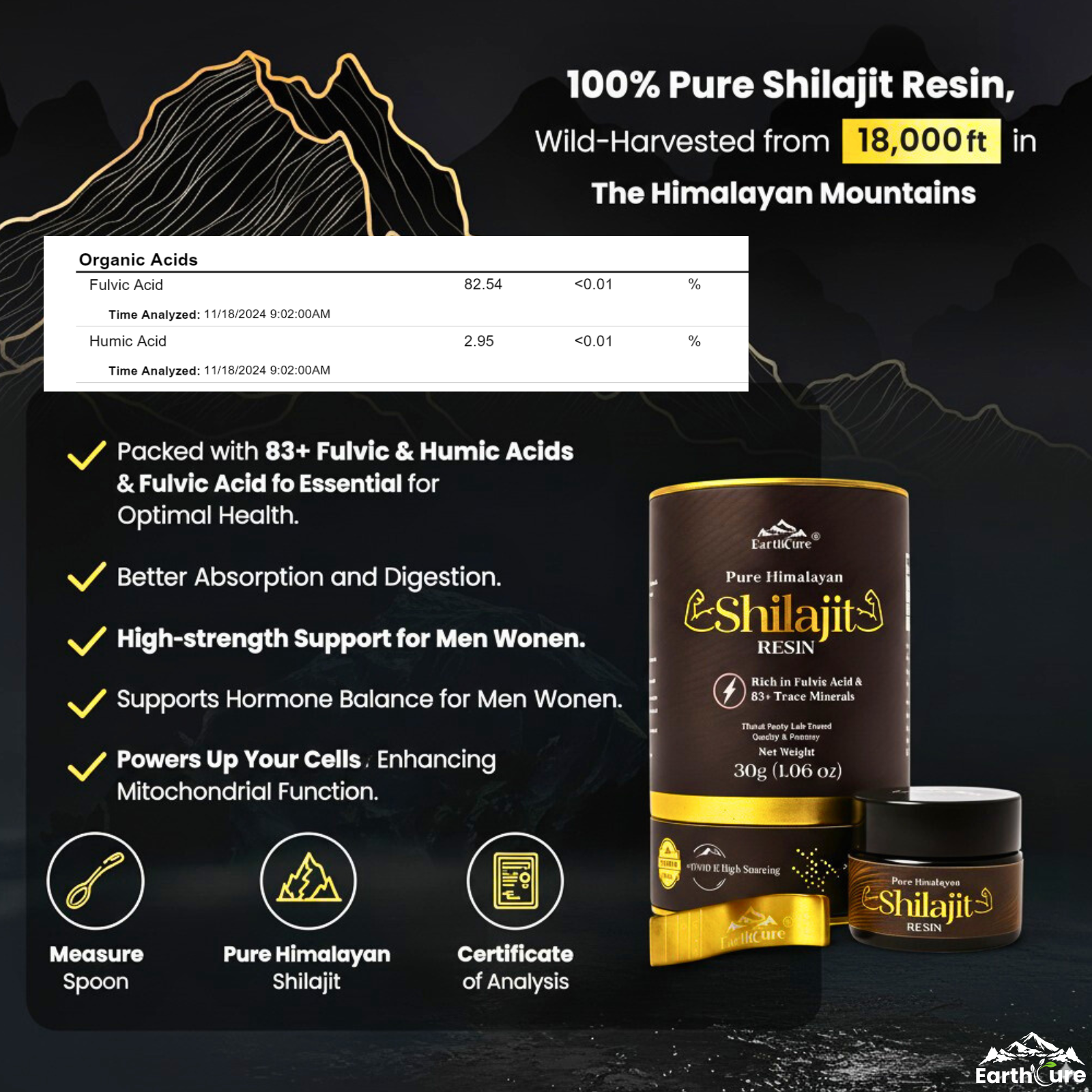
Storing shilajit the right way is one of the simplest things you can do to protect a product you paid good money for. Pure Himalayan Shilajit resin is remarkably stable by nature, but a few small habits, where you keep the jar, how you scoop it, and whether moisture ever gets inside, decide whether your resin stays rich and potent or hardens, weeps, and gets contaminated.
The good news is that storing shilajit is genuinely easy. You do not need a special fridge, a vacuum chamber, or any gadgets. Resin is a thick, mineral-dense substance that survived for centuries in Himalayan rock, so it is forgiving. What it asks of you is mostly protection from light, control of moisture, and clean handling.
This guide covers ideal temperature, why amber glass matters, humidity and hygiene, why your resin hardens in the cold and softens in the heat (both normal), travel tips, how to tell a quality product from a degraded one, common storage mistakes, and a realistic look at shilajit shelf life. By the end you will know exactly how to store shilajit resin for maximum potency.
What Actually Degrades Shilajit (and What Doesn't)
A lot of "storage advice" online treats shilajit as if it were as fragile as fresh fruit. It is not. But three things can genuinely reduce quality over time.
- Light, especially UV. Sustained sunlight and bright light can slowly break down some of the sensitive organic compounds in resin, the main reason quality brands use amber glass.
- Moisture and water. Shilajit is hygroscopic, meaning it attracts water. Introducing water, through a wet spoon, humid air, or condensation, is the main way a clean resin gets contaminated or grows mold.
- Prolonged high heat. Warmth itself does not "spoil" resin, but constant heat (a sunny windowsill, a hot car) speeds up oxidation and makes the resin runny and harder to handle.
What does not meaningfully harm properly sealed shilajit: ordinary room-temperature swings, brief air exposure during a daily scoop, or the resin changing firmness with the seasons. Keep those three real risks in mind and the rest of this guide makes intuitive sense.
Why It Hardens in the Cold and Softens in the Heat
This is the question we get most, so let's settle it early: a resin that turns rock-hard in a cool room and becomes soft, sticky, or almost pourable on a warm day is behaving exactly as pure shilajit should.
Genuine resin is temperature-responsive. In cool conditions it stiffens and can feel like hard toffee or even glass; in warmth it relaxes and becomes pliable or gooey. This is not degradation. In fact, this responsiveness is one informal indicator of authenticity, fake or heavily adulterated products often behave the same regardless of temperature, which we cover in our guide on how to spot fake shilajit.
How to Store Shilajit Resin: Ideal Temperature
For everyday storage, the sweet spot is a stable, cool-to-normal room temperature, roughly 59–77°F (15–25°C). A cupboard, pantry shelf, or drawer in a climate-controlled room is ideal.
- Room temperature is the default. Resin is shelf-stable and does not require refrigeration to stay safe or potent.
- Avoid heat sources. Keep the jar away from stoves, ovens, radiators, warm electronics, and direct sun.
- Refrigeration is optional. Fine if you live somewhere very hot, but it makes the resin hard to scoop, and moving a cold jar into warm air invites condensation. If you do refrigerate, let the jar reach room temperature before opening.
- Skip the freezer. It offers no real benefit and makes the resin brittle and inconvenient.
A Quick Word on Consistency
If your resin is too hard to scoop on a cold morning, warm the closed jar gently, hold it in your hands, set it near (not on) something warm, or stand it in a bowl of warm water with the lid on. Never microwave it and never add water to soften it.
Light Protection and Why Amber Glass Matters
If temperature is the easy part, light protection is the part most people overlook. Clear glass and clear plastic let UV and visible light reach the resin directly, and over months that exposure is one of the few things that can quietly chip away at potency.
This is exactly why premium shilajit ships in amber (dark) glass. Amber glass filters out much of the damaging light spectrum while staying completely non-reactive, it will not leach anything into the resin the way some plastics can. Pair that amber jar with a dark cupboard and your shilajit is well protected.
✅ Keep the jar in a closed cabinet, drawer, or pantry ✅ Use amber or otherwise opaque/dark containers ✅ Leave the resin in its original protective jar whenever possible ❌ Do not display it on a sunny windowsill or open shelf ❌ Do not decant it into clear glass or clear plastic for long-term storage
You can read more about why packaging and sourcing standards matter in our overview of premium shilajit quality standards.
Humidity, Moisture, and Hygiene
If one rule matters more than the others, it is this: keep water away from your shilajit. Because resin is hygroscopic and naturally tacky, any moisture that gets in can dilute it, change its texture, and let mold grow on the surface.
The Clean, Dry Spoon Rule
Always use a clean, completely dry utensil to scoop your dose. A small dab of resin (about a pea or rice-grain size) lifts easily with the right tool.
- Use a dedicated stainless-steel or other non-reactive spoon, spatula, or toothpick.
- Make sure it is bone dry, even a few droplets can introduce contamination over time.
- Never dip a wet spoon, wet finger, or a just-used utensil into the jar, and avoid "double-dipping" anything that has touched your mouth or a drink.
A practical tip: scoop your resin first with the dry spoon, then stir it into warm water, milk, or tea in a separate cup, so the liquid never goes near the jar. For more on preparation and dosing, see our complete guide on how to use shilajit.
Managing Humidity
- Store the jar in normal household humidity, not a steamy bathroom or right next to the kitchen sink or kettle.
- In very humid climates, a food-safe silica gel desiccant packet kept near (not touching) the jar in a cabinet can help.
- Close the lid firmly and promptly. Most "moisture" problems are really just a lid left loose or open too long.
- If you refrigerate, watch for condensation when the jar warms up, and never open it until it has fully reached room temperature.
Storage Do's and Don'ts at a Glance
| Do ✅ | Don't ❌ |
|---|---|
| Store at a stable 59–77°F (15–25°C) | Leave it in a hot car, by a stove, or in direct sun |
| Keep it in dark amber glass in a cupboard | Store it on a sunny windowsill or in clear containers |
| Use a clean, completely dry utensil | Dip wet spoons, wet fingers, or used cutlery in the jar |
| Seal the lid tightly right after each use | Leave the jar open while you prepare your drink |
| Keep it in a low-humidity spot | Store it in the bathroom or next to the sink/kettle |
| Let it firm up or soften with temperature naturally | Add water to "soften" it or microwave the jar |
| Keep it well out of reach of children and pets | Decant long-term into reactive plastic |
Storage by Climate and Season
Hot or Tropical Climates
In high heat, resin becomes very soft and can pool toward the bottom of the jar, harmless, but messy. Keep it in the coolest, most stable indoor spot you have, ideally air-conditioned. Refrigeration is reasonable here; just let the sealed jar warm up before opening to avoid condensation.
Humid Climates
Moisture control is the priority. Ensure a tight seal every time, consider a desiccant packet in the cabinet, and keep the jar away from bathrooms and kitchens where steam collects. Check occasionally for condensation inside the lid.
Cold Climates
Cold storage is easy and actually slows oxidation; the only trade-off is firm resin that takes patience to scoop. Warm the closed jar in your hands or near a warm surface before use, and avoid freezing.
Travel Tips: Keeping Resin Safe On the Go
Shilajit travels well as long as you protect it from heat and crushing.
- Keep it sealed and upright. Resin can migrate and get sticky in transit, so double-check the lid and stand the jar upright in your bag.
- Favor carry-on over checked luggage when flying. Cargo holds can get hot or very cold; a carry-on keeps the jar in a more stable environment with you.
- Avoid leaving it in a parked car. A hot dashboard is one of the worst places you can put resin.
- For short trips, the original amber jar is usually all you need; wrap it in a sock or cloth for cushioning and extra light protection.
- For longer trips, transfer a small amount into a clean, dry, dark, food-grade travel container, just enough for the days away, and leave your main jar safely at home.
Quality vs. Degraded Shilajit: How to Tell the Difference
Most "is my shilajit bad?" worries turn out to be normal resin behavior. Here is how to separate the two.
Signs of a Healthy, Quality Resin
- A deep brownish-black to dark golden-brown color (some natural variation is expected).
- An earthy, smoky, or mineral-like smell.
- Temperature-responsiveness: firm when cool, soft and stretchy when warm.
- Dissolves into warm water with a golden-brown to dark color and little to no gritty sediment.
A genuinely high-quality resin starts from clean sourcing and verified purity, which is why third-party testing matters so much. See our article on why lab-tested shilajit matters.
Signs Something Is Actually Wrong
These are the real red flags that mean you should stop using a jar:
- Visible mold or fuzzy growth, almost always from water getting in. Discard it.
- A sour, chemical, rancid, or "off" smell clearly different from its normal earthy scent.
- Gritty, sandy, or heavily granular texture that does not dissolve, which can indicate contamination or adulteration.
- A lot of insoluble residue in your cup, with the liquid staying murky rather than clearing to a brown tone.
Color shifting slightly, hardening, or softening in heat are not on this list. Those are normal.
Common Storage Mistakes to Avoid
Even careful people slip up. These are the mistakes we see most often:
- Using a wet spoon or wet fingers. The number-one cause of contamination. Dry your utensil first, every time.
- Bathroom or windowsill storage. Humidity and sunlight are the two biggest enemies, and these spots deliver both.
- Adding water to soften hard resin. This invites mold. Warm the sealed jar instead.
- Leaving it in a hot car or decanting into clear plastic. Repeated heat and light exposure is hard on any natural extract; keep it cool and in its amber glass.
Realistic Shilajit Shelf Life
So how long does shilajit actually last? Pure resin is one of the more stable supplements you can own. As a mineral- and fulvic-acid-rich substance, it does not "expire" the way perishable foods do. Stored properly, sealed, dark, dry, and cool, it retains its quality for a long time. Always defer to the best-by or expiration date printed on your specific jar, since that reflects the manufacturer's own testing and guidance.
| Condition | Practical Guidance |
|---|---|
| Unopened, stored well | Stays in good condition through the date printed on the jar; resin is naturally shelf-stable when sealed and protected. |
| Opened, handled cleanly | Best enjoyed within a reasonable window of regular use; clean, dry handling is what preserves it. |
| Exposed to water or contamination | Quality can drop quickly; discard at any sign of mold or off smell regardless of date. |
| Left in heat or sunlight | Potency may decline faster; protect from heat and light to get the most from it. |
The single biggest factor in real-world shelf life is not time, it is handling. A jar kept dark, sealed, and free of moisture will outlast one constantly exposed to light and damp, even with the same printed date. The original product's quality matters too; a clean, pure, lab-verified resin gives you the best starting point.
Why EARTHCURE™ Is Built for Easy Storage
We designed our packaging around the same principles in this guide, so good storage is mostly done for you out of the box.
- Amber-glass jar. EARTHCURE™ Pure Himalayan Shilajit Resin comes in a 30g amber-glass jar that filters damaging light and stays non-reactive, protecting potency from day one.
- Pure resin, nothing added. It is single-origin, high-altitude Himalayan resin, no powders, capsules, or fillers, so there is less to go wrong and nothing extra to degrade.
- Gold Grade purity, verified. With 82% fulvic acid and USA third-party lab testing (Certificate of Analysis, non-detect heavy metals), you start from a clean base, the most important factor in how well any resin keeps.
- A sensible 30g size. Enough to last a good while, but sized so the jar does not sit half-empty and over-exposed to air for years.
You can see the full specs and Certificate of Analysis details on our product page, or buy directly on Amazon.
Frequently Asked Questions
Q: Does shilajit need to be refrigerated?
A: No. Shilajit resin is shelf-stable and does well at a stable room temperature of about 59–77°F (15–25°C). Refrigeration is optional and mainly useful in very hot climates, but it makes the resin hard to scoop and can cause condensation, so let a chilled jar warm up fully before opening.
Q: Why does my shilajit get hard in winter and soft in summer?
A: That is completely normal and actually a good sign. Genuine resin is temperature-responsive: it stiffens when cool and softens or becomes gooey when warm. This is not spoilage. To soften hard resin, warm the sealed jar in your hands or near a warm surface, never add water.
Q: How do I know if my shilajit has gone bad?
A: Watch for true red flags: visible mold or fuzzy growth, a sour or chemical smell that is clearly different from its normal earthy scent, or a gritty texture that will not dissolve. Color changes and changes in firmness are normal and not signs of spoilage. When in doubt, discard any jar with mold or an off smell.
Q: Can water ruin my shilajit?
A: Yes, water is the main thing to keep out. Resin attracts moisture, so a wet spoon, humid air, or condensation can dilute it and lead to mold over time. Always use a clean, dry utensil, reseal promptly, and scoop the resin before stirring it into any liquid, in a separate cup.
Q: How long does shilajit last once opened?
A: Pure resin is very stable and, when handled cleanly, keeps its quality well over time. Always follow the best-by date on your specific jar. The biggest factor is handling, dark, dry, sealed storage with a clean dry spoon preserves it far longer than careless exposure to light and moisture.
Q: What is the best container for storing shilajit?
A: Dark amber glass with a tight-sealing lid is ideal, which is exactly why quality brands use it. Amber glass blocks damaging light and will not react with the resin. Keeping shilajit in its original amber jar, inside a cool, dark cupboard, is the simplest best practice.
Q: Can I travel with shilajit resin?
A: Yes. Keep it sealed and upright, protect it from heat (avoid hot cars and checked luggage when flying), and the original amber jar usually suffices for short trips. For longer travel, you can move a small amount into a clean, dry, dark, food-grade container and leave your main jar at home.
Key Takeaways
Storing shilajit well comes down to a few easy habits: keep it cool and out of direct heat, protect it from light in dark amber glass, keep water and humidity away, and always scoop with a clean, dry spoon. Do that, and your resin stays rich, potent, and pleasant to use for a long time, while seasonal changes in firmness are nothing to worry about.
If you want a resin built to store well from the start, pure, single-origin, amber-glass-protected, and third-party lab tested, explore EARTHCURE™ Pure Himalayan Shilajit Resin on our product page or pick it up on Amazon. Quality in, quality preserved.
Medical Disclaimer: This article is for informational purposes only and is not medical advice. EARTHCURE™ shilajit is a dietary supplement and is not intended to diagnose, treat, cure, or prevent any disease. These statements have not been evaluated by the FDA. Consult a qualified healthcare professional before use, especially if you are pregnant, nursing, taking medication, or have a medical condition.