Most people who ask about shilajit side effects are doing exactly the right thing: pausing to understand a supplement before they take it. The honest, reassuring news is that pure, properly purified shilajit is generally well tolerated by healthy adults, and serious reactions are uncommon. The bigger safety story is not really about the resin itself — it is about what can hide inside cheap, raw, or unverified product.
That distinction matters more than almost anything else here. Genuine, lab-tested Himalayan shilajit and a contaminated knock-off can look nearly identical in the jar, yet they carry very different risk profiles. So when we talk about shilajit side effects and shilajit safety, we are really talking about two things at once: the mild, manageable effects some people notice as their body adjusts, and the avoidable risk of heavy-metal contamination that comes from skipping third-party testing.
This article covers both honestly — the mild effects that can occur, who should avoid shilajit or talk to a doctor first, how to start low and assess your tolerance, the most important shilajit contraindications, and how to choose a product so the question "is shilajit safe for me?" has a clear, confident answer.
Is Shilajit Safe? A Realistic Overview
Shilajit is a sticky, mineral-rich resin that seeps from rock layers in high mountain ranges and has been used in traditional Ayurvedic practice for centuries. In modern use it is a dietary supplement, not a medicine — it is not intended to diagnose, treat, cure, or prevent any disease, and it has not been evaluated by the FDA for those purposes.
For most healthy adults, shilajit safety comes down to three variables:
- Purity — whether the resin has been purified and verified free of heavy metals and other contaminants.
- Dose — how much you take, and how gradually you build up to it.
- Personal context — your health conditions, medications, and life stage.
Get those three right and shilajit has a reassuring tolerability profile. A widely cited safety and efficacy review by Stohs (2014) in Phytotherapy Research concluded that purified shilajit is generally well tolerated at commonly used doses. Get purity wrong, however, and the supplement that was supposed to support your wellness can become a source of harm. That is the single most important point in this entire guide.
The Real Safety Concern: Contamination, Not the Resin
Raw, unpurified shilajit scraped straight from rock and sold without testing can carry serious contaminants. This is where the genuine risk lives — not in the molecule, but in what travels alongside it when corners are cut.
Unverified product may contain:
- ⚠️ Heavy metals — lead, mercury, arsenic, and cadmium that accumulate in the body over time
- ⚠️ Mycotoxins and mold from improper drying or storage
- ⚠️ Bacterial contamination from unsanitary processing
- ⚠️ Fillers and adulterants — cheap substitutes blended in to cut costs
You cannot taste, see, or smell heavy-metal contamination. The only reliable way to know a product is clean is a third-party Certificate of Analysis (COA). This is exactly why lab testing sits at the center of shilajit safety, and we cover how to read it in our guide on why lab-tested shilajit matters.
Possible Shilajit Side Effects
When side effects do occur with pure shilajit, they are usually mild, temporary, and tied to your body adjusting or to taking too much too soon. Most resolve on their own or after a small dose reduction.
Mild Effects Some People Notice
- Digestive adjustment — mild stomach upset, loose stools, or slight nausea, most common in the first days or with larger doses
- Changes in energy or sleep — some people feel more alert; taking shilajit late in the day may make it harder to wind down
- Headache — uncommon and usually mild
- An earthy or "mineral" taste — not a side effect so much as a characteristic of authentic resin
Many users report no noticeable effects beyond the benefits they were hoping to support. If you do experience something mild, it is rarely a reason to stop entirely.
How to Manage Mild Effects
- ✅ Lower your dose for a week, then ease back up
- ✅ Take it with food if your stomach feels sensitive
- ✅ Take it earlier in the day if it affects your sleep
- ✅ Drink plenty of water throughout the day
- ✅ Give your body time to adjust before judging tolerance
When to Stop and Seek Medical Advice
Although rare with pure product, stop use and contact a healthcare professional if you experience:
- ⚠️ Signs of an allergic reaction (rash, itching, swelling, trouble breathing)
- ⚠️ Persistent or severe digestive distress
- ⚠️ Any unusual or concerning symptoms that do not settle quickly
Symptoms like these are far more likely with contaminated or adulterated product, which is one more reason to insist on tested resin.
Shilajit Contraindications: Who Should Avoid It or Use Caution
Some people should not take shilajit, and others should only take it after talking with a qualified healthcare provider. The table below summarizes the most important shilajit contraindications. This is general information, not a personal medical assessment — when in doubt, ask your doctor.
| Group | Guidance | Why |
|---|---|---|
| Pregnancy | Avoid unless your provider directs otherwise | Safety in pregnancy has not been established |
| Breastfeeding | Avoid unless your provider directs otherwise | Limited safety data; little is known about transfer to milk |
| Children and teens (under 18) | Avoid unless supervised by a clinician | Research and dosing in minors are lacking |
| Hemochromatosis / iron overload | Avoid | Shilajit contains iron and may add to iron accumulation |
| Gout or high uric acid | Use caution; discuss with your doctor | May affect uric acid levels in susceptible people |
| Low blood pressure | Use caution; monitor how you feel | May contribute to lowering blood pressure |
| Scheduled surgery | Pause beforehand per your surgeon's advice | Sensible to stop most supplements around surgery |
| On prescription medication | Consult your doctor or pharmacist first | Possible interactions (see below) |
| Known allergy to shilajit | Avoid all forms | Risk of allergic reaction |
Iron Overload (Hemochromatosis)
Because shilajit naturally contains iron, anyone with hemochromatosis or another iron-overload condition should avoid it. Adding iron when your body already stores too much is the opposite of what you want.
Pregnancy, Breastfeeding, and Children
There simply is not enough research to call shilajit safe during pregnancy or breastfeeding, or for children and teenagers. In the absence of good data, the responsible choice is to avoid it in these groups unless a healthcare provider specifically advises otherwise.
Gout, Blood Pressure, and Surgery
If you have gout or a history of high uric acid, mention shilajit to your doctor before starting. If you run a naturally low blood pressure or take medication that lowers it, pay attention to how you feel. And because it is standard practice to pause supplements before surgery, plan to stop shilajit ahead of any scheduled procedure according to your surgeon's instructions.
Potential Interactions With Medications
Shilajit is mineral-rich and biologically active, so it is wise to check with your doctor or pharmacist if you take prescription medication. The interactions below are described in general, cautionary terms; they are reasons to ask a professional, not confirmed clinical outcomes for everyone.
| Medication type | Why to check with your provider |
|---|---|
| Blood-pressure medication | Combined effect could lower blood pressure further |
| Diabetes medication | Possible effect on blood-sugar control |
| Blood thinners / anticoagulants | Discuss before combining with any new supplement |
| Iron supplements | Shilajit adds iron, so total intake may rise |
| Any chronic-condition medication | General caution; let your prescriber weigh in |
The simplest rule: if you take anything daily by prescription, run shilajit past your healthcare provider before you begin. It is a short conversation that removes most of the uncertainty.
How to Start Low and Assess Your Tolerance
Starting conservatively is the easiest way to keep side effects minimal and learn how your body responds. There is no benefit to rushing — more is not better, and larger doses simply raise the odds of mild digestive effects.
A sensible, cautious approach:
- Begin small. A portion of resin roughly the size of a grain of rice is a common starting point. Follow the directions on your product label.
- Hold steady for several days to a week. Notice digestion, energy, and sleep before changing anything.
- Adjust gradually only if you tolerate it well and feel you need to.
- Take it earlier in the day while you learn your response, so it does not interfere with sleep.
- Stay consistent and hydrated, and reassess periodically.
For a fuller walkthrough of dosing, timing, and how to dissolve resin properly, see our complete guide on how to use shilajit. If you ever feel "wired," restless, or unsettled in your stomach, that is usually a signal to ease back rather than push forward.
How to Choose a Safe Shilajit Product
Because the largest real risk is contamination, choosing a trustworthy product is the most protective decision you can make. Use this quick checklist before you buy anything.
- ✅ Third-party lab tested with a COA you can actually view
- ✅ Non-detect or safe heavy-metal results on that report
- ✅ Pure resin, not powders or capsules that are easier to adulterate
- ✅ Single, clearly stated origin rather than vague "Himalayan blend" language
- ✅ A real maker and contact details, so there is accountability behind the jar
Warning signs to walk away from:
- 🚫 No lab testing, or a "report" with no lab name or date
- 🚫 Suspiciously cheap pricing for "Himalayan" resin
- 🚫 Bold disease-cure claims (a compliant brand never makes them)
- 🚫 Powders and capsules with no purity verification
Spotting fakes is a skill worth building; our guide on how to spot fake shilajit breaks down the tells in detail, and our overview of premium shilajit quality standards explains what "good" actually looks like.
Why EARTHCURE™ Is Built Around Safety
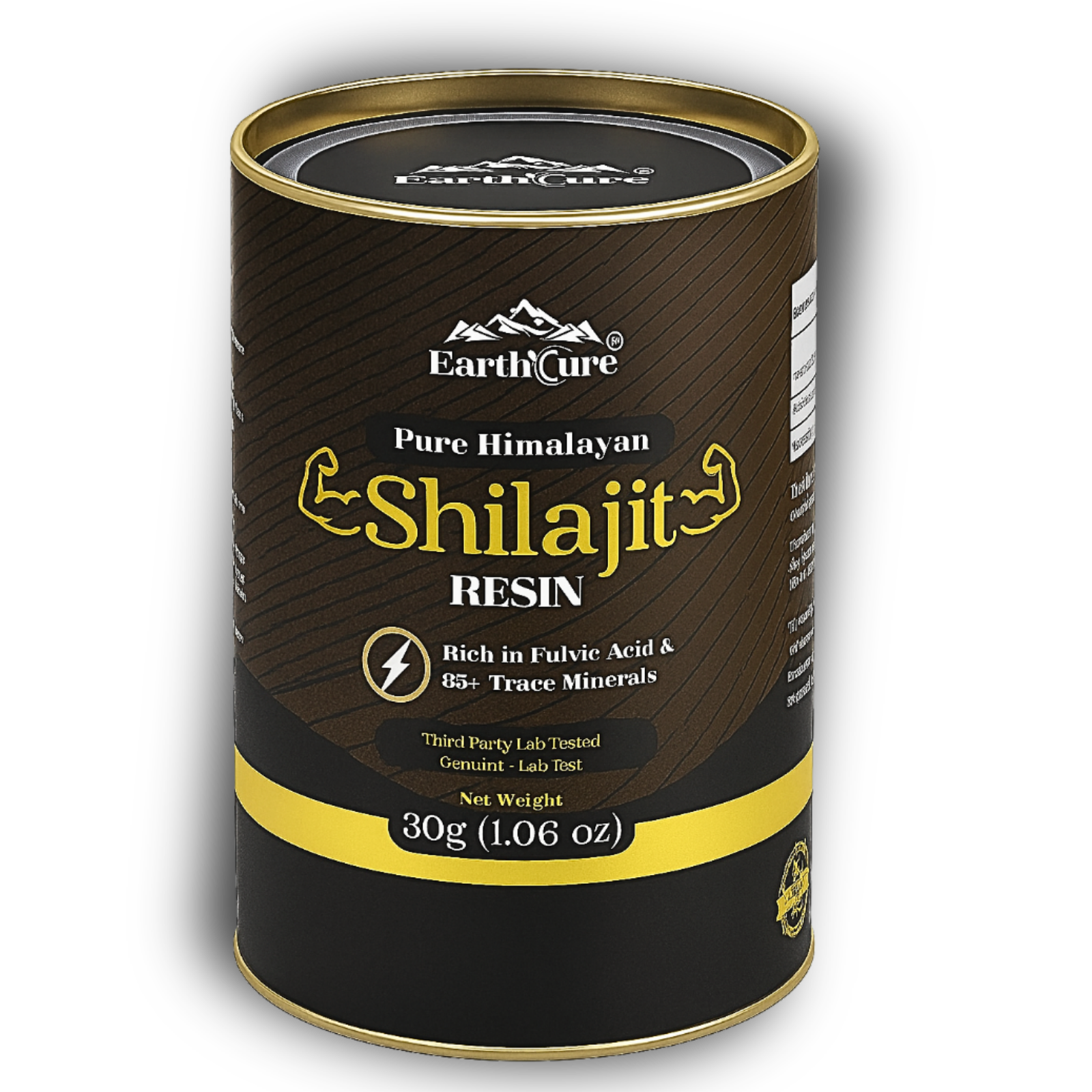
EARTHCURE™ Pure Himalayan Shilajit Resin is designed so the purity question is settled before you ever open the jar. It is USA third-party lab tested with a Certificate of Analysis, and that testing returns non-detect heavy metals — directly addressing the contamination risk that defines shilajit safety. It is single-origin, high-altitude Himalayan resin verified at 82% fulvic acid ("Gold Grade"), with no powders, capsules, or fillers to dilute or hide what you are taking. Each 30g jar is packaged in amber glass to protect the resin, and it is made by AUH Partners LLC. You can read the full purity story on the product page. None of this changes the basic advice in this article — start low, and check with your doctor if any of the cautions above apply to you — but it does mean the most important safety variable, purity, is handled and documented.
Frequently Asked Questions
Q: Is shilajit safe to take every day?
A: For most healthy adults, pure and lab-tested shilajit is generally well tolerated as a daily supplement when taken at a modest dose. The key word is "pure" — daily use of an unverified, contaminated product is where real risk creeps in. Start with a small amount, see how your body responds, and check with your doctor if you have a medical condition or take medication.
Q: What are the most common shilajit side effects?
A: When they occur with pure resin, side effects are usually mild and temporary — most often minor digestive adjustment such as an upset stomach or loose stools, and occasionally lighter sleep if taken late in the day. They tend to ease as your body adjusts or after a small dose reduction. Persistent or severe symptoms are uncommon and warrant pausing and speaking with a healthcare professional.
Q: Who should not take shilajit?
A: People who are pregnant or breastfeeding, children and teenagers, and anyone with hemochromatosis or iron overload should avoid shilajit unless a clinician directs otherwise. Those with gout, low blood pressure, an upcoming surgery, or a prescription medication should consult their doctor first. When in doubt, ask a qualified healthcare provider before starting.
Q: Can shilajit cause heavy-metal poisoning?
A: Pure, properly purified shilajit should not — but raw or unverified product can contain lead, mercury, arsenic, or cadmium, which is the single biggest safety concern with this supplement. The only reliable protection is choosing a product that is third-party lab tested with a Certificate of Analysis showing non-detect or safe heavy-metal levels. Never buy shilajit without that verification.
Q: Does shilajit interact with medications?
A: It can, which is why a quick check with your doctor or pharmacist is wise if you take anything regularly. In general terms, pay particular attention if you are on blood-pressure or diabetes medication, blood thinners, or iron supplements, since shilajit is mineral-rich and biologically active. This is general caution rather than a guarantee of interaction for every person.
Q: How much shilajit should a beginner take?
A: A common starting point is a small portion of resin roughly the size of a grain of rice, following your product's label directions, held steady for several days to a week before any adjustment. Starting low keeps mild side effects to a minimum and lets you learn your tolerance. Our how to use shilajit guide covers dosing and timing in more detail.
Q: Is it safe to take shilajit before surgery?
A: It is standard practice to pause most supplements, including shilajit, ahead of a scheduled surgery. Tell your surgeon and anesthesiologist about everything you take, and follow their instructions on when to stop. This is a routine precaution that helps avoid any unwanted effects around your procedure.
Key Takeaways
The honest summary is encouraging: for most healthy adults, shilajit side effects are mild and manageable, and pure resin has a reassuring tolerability profile. The risk that genuinely deserves your attention is contamination from raw or unverified product — and that risk is almost entirely avoidable by choosing third-party lab-tested shilajit with a Certificate of Analysis. Start low, assess your tolerance, respect the contraindications above, and talk to your doctor if you are pregnant, nursing, taking medication, or managing a health condition.
If you want a product where purity is already verified and documented, explore EARTHCURE™ Pure Himalayan Shilajit Resin on our product page, or buy it directly on Amazon. Taking a few minutes to choose tested resin is the simplest, most effective safety step you can make.
Medical Disclaimer: This article is for informational purposes only and is not medical advice. EARTHCURE™ shilajit is a dietary supplement and is not intended to diagnose, treat, cure, or prevent any disease. These statements have not been evaluated by the FDA. Consult a qualified healthcare professional before use, especially if you are pregnant, nursing, taking medication, or have a medical condition.