If you have shopped for resin online, you have almost certainly run into the himalayan shilajit versus Russian (Altai) debate. Both come from high mountain ranges, both carry centuries of traditional use, and both are sold as the same dark, sticky, mineral-rich substance — yet the marketing can make the choice feel confusing, with each side claiming to be the "original" or the "purest."
The honest answer is that origin alone does not determine quality. A well-sourced, lab-verified resin from either region can be excellent, and a poorly sourced one from either can be disappointing or even unsafe. What matters most is altitude, purification, fulvic acid content, and independent testing — not the name of the mountain range on the label.
This guide gives you a fair, plain-English himalayan vs russian shilajit comparison: geography and altitude, fulvic acid and mineral profiles, color, texture, and taste, the two distinct traditions behind each, and the quality markers that actually help you choose. EarthCure sources high-altitude Himalayan resin, and we will explain why, but the goal here is simply to help you decide well.
What Shilajit Is and Where It Comes From
Shilajit is a tar-like exudate that seeps from cracks in high-elevation rock, formed over a very long period from the slow breakdown of plant and microbial material under pressure and extreme temperature swings. As it forms, it concentrates fulvic acid, humic substances, and a broad spectrum of trace minerals. Because the source rock and surrounding plant life differ by region, the finished resin varies somewhat between mountain systems.
Two origins dominate the conversation:
- Himalayan shilajit — collected across the greater Himalayan belt, including parts of Nepal, India, Pakistan, Bhutan, and the Tibetan plateau, often at very high altitude.
- Russian / Altai shilajit — collected in the Altai Mountains and surrounding Central Asian ranges spanning Russia, Kazakhstan, and Mongolia. In this region it is traditionally known as mumijo (also spelled mumiyo or mumie).
Both are authentic forms of the same broad substance, and the differences are usually a matter of degree, not kind. For a deeper primer on what the resin is and how it is used, see our complete guide to pure Himalayan Shilajit.
Geography and Altitude: The Core Difference
Altitude is the factor most often cited in the shilajit comparison between these regions, and there is a reasonable logic behind it.
Why High-Altitude Resin Is Prized
The greater Himalaya contains some of the highest collection sites on Earth. Higher elevations tend to mean a more remote, less polluted environment and a longer, slower formation under harsh conditions — which practitioners and brands associate with a more concentrated, refined raw resin.
The Altai range is also genuinely high and remote, but on average its collection sites sit somewhat lower than the loftiest Himalayan ones. That does not make Altai resin "bad"; it simply means premium Himalayan material often carries higher headline altitude figures.
One honest nuance: altitude is a useful proxy, not a guarantee. A meticulously purified Altai resin can outperform a carelessly processed Himalayan one. Altitude tells you about the environment; only testing tells you about the product in the jar.
Fulvic Acid and Mineral Profiles
Fulvic acid is the compound most people care about, because it is closely tied to the resin's traditional benefits and to how well its minerals are carried into the body. It is also where you should be most skeptical of marketing.
Be Wary of Exact Numbers for "Russian" Shilajit
You will see websites quote precise fulvic acid percentages for Russian or Altai shilajit. Treat these with caution. Content varies widely by collection site, season, and — crucially — purification method, for resin from every region. Premium, well-purified resin from either origin can be high in fulvic acid; both regions also produce weaker material when collection or processing is rushed. The only number worth fully trusting is one tied to a batch-specific third-party Certificate of Analysis (COA).
For context, EarthCure's resin is independently tested at 82% fulvic acid — a figure we can state because it comes from our own USA third-party lab testing, not a general claim about a region.
Minerals and Other Compounds
Both Himalayan and Altai resin deliver a broad spectrum of trace minerals and humic substances. Profiles differ slightly because the parent rock and vegetation differ, and some sources note variation in compounds such as dibenzo-alpha-pyrones between samples. The takeaway: both are mineral-rich, neither is nutritionally "empty," and marginal differences matter far less than whether the product is pure and contaminant-free.
Color, Texture, Taste, and Other Sensory Differences
Day to day, most users will not notice a dramatic sensory gap between high-quality resin from the two regions, but there are general tendencies.
| Characteristic | Himalayan Resin | Russian / Altai Resin |
|---|---|---|
| Typical collection altitude | Very high (among the highest sites on Earth) | High, but often somewhat lower on average |
| Region | Nepal, India, Pakistan, Bhutan, Tibet | Russia, Kazakhstan, Mongolia (Altai) |
| Traditional name | Shilajit (Ayurveda) | Mumijo / mumiyo |
| Color | Dark brown to black, glossy when warm | Dark brown to black, glossy when warm |
| Texture | Sticky, tar-like resin that softens with heat | Sticky, tar-like resin that softens with heat |
| Taste | Strong, earthy, bitter, smoky-mineral | Strong, earthy, bitter, sometimes slightly different mineral note |
| Fulvic acid | Typically high in premium resin (varies by source) | Typically high in premium resin (varies by source) |
| Documented tradition | Extensive Ayurvedic record | Central Asian and Soviet-era record |
| Counterfeit pressure | High, due to global demand | Present, varies by exporter |
If a product is odorless, dissolves into a clear chemical-looking liquid, or leaves sandy residue, that is a red flag regardless of the mountain range it claims. Our guide on how to spot fake shilajit covers these at-home checks in detail.
Two Traditions: Ayurveda vs Mumijo
Part of what makes this comparison interesting is that each region carries its own long history of use.
The Himalayan / Ayurvedic Tradition
In Ayurveda, shilajit is a classical rasayana — a category of rejuvenating substances traditionally used to support vitality, stamina, and healthy aging. Its name is often translated as "conqueror of mountains and destroyer of weakness," and this is the framework most Western shilajit marketing draws on.
The Russian / Central Asian Mumijo Tradition
In the Altai and broader Central Asia, mumijo has its own deep folk-medicine lineage and was the subject of considerable Soviet-era investigation, including interest in recovery and general resilience. It is the same broad substance viewed through a different cultural lens.
Neither tradition makes one resin objectively "better"; they are parallel histories of mountain peoples valuing a similar substance. And traditional use is not the same as proven medical treatment — it tells us how the substance has been used, not what it is clinically guaranteed to do.
What the Research Actually Says
Most modern, peer-reviewed shilajit studies use purified Himalayan-sourced material — one practical reason Himalayan resin is so often referenced in supplement science. A few real, frequently cited examples, in general terms:
- Pandit et al. (2016), Andrologia, which examined purified shilajit in relation to male hormonal health.
- Carrasco-Gallardo et al. (2012), International Journal of Alzheimer's Disease, a review discussing fulvic acid and shilajit in the context of cognitive aging.
- Stohs (2014), Phytotherapy Research, which reviewed the safety profile of shilajit (mumie/moomiyo).
These point toward areas researchers find interesting, but the evidence base is still limited and ongoing. Shilajit is a dietary supplement; research suggests potential supportive roles, and it is not a treatment or cure for any disease. Anyone investigating it for a specific health concern should talk with a qualified healthcare professional.
Purity and Sourcing: Where the Real Risk Lives
Here is what matters more than the Himalaya-versus-Altai question: purity. Because raw shilajit forms in and on rock, it can carry heavy metals or other contaminants if it is not properly purified and tested — true of every origin.
Quality Markers That Beat Origin Alone
Instead of choosing on geography, weigh these signals, which apply equally to both:
✅ A batch-specific third-party Certificate of Analysis (COA) confirming fulvic acid content ✅ Heavy metal testing showing non-detect or safe trace levels (lead, arsenic, mercury, cadmium) ✅ Pure resin form with no powders, capsules, fillers, or synthetic fulvic acid added ✅ Transparent sourcing — a brand willing to name region, altitude, and processing ✅ A reasonable price that reflects genuine sourcing and testing costs
A product that nails these is a smart buy whether it is Himalayan or Altai. A product that hides them is a gamble no matter how impressive the origin story sounds. For a fuller checklist, see our breakdown of premium shilajit quality standards.
How to Choose the Best Shilajit Type for You
So which is the best shilajit type? Choose the resin with the best verified quality you can find, and let origin be a tiebreaker rather than the whole decision.
Lean Himalayan If You Want To
- Prioritize the highest-altitude, most globally documented source
- Match the material used in most modern shilajit research
- Follow the classical Ayurvedic rasayana tradition
Altai Can Be a Reasonable Choice If
- You have a transparent, lab-tested source you trust
- You specifically want resin from the mumijo tradition
- The COA and heavy-metal results check out as they would for Himalayan
Either way, run the quality-marker checklist above before you buy. If a product cannot answer it, walk away — no matter how exotic the mountain range sounds. Grade matters as much as geography, which is why it helps to understand the difference between gold grade and regular shilajit.
Why EARTHCURE™ Chooses High-Altitude Himalayan Resin
We made a deliberate choice to source single-origin, high-altitude Himalayan shilajit, held to the same purity standards we would demand of any origin:
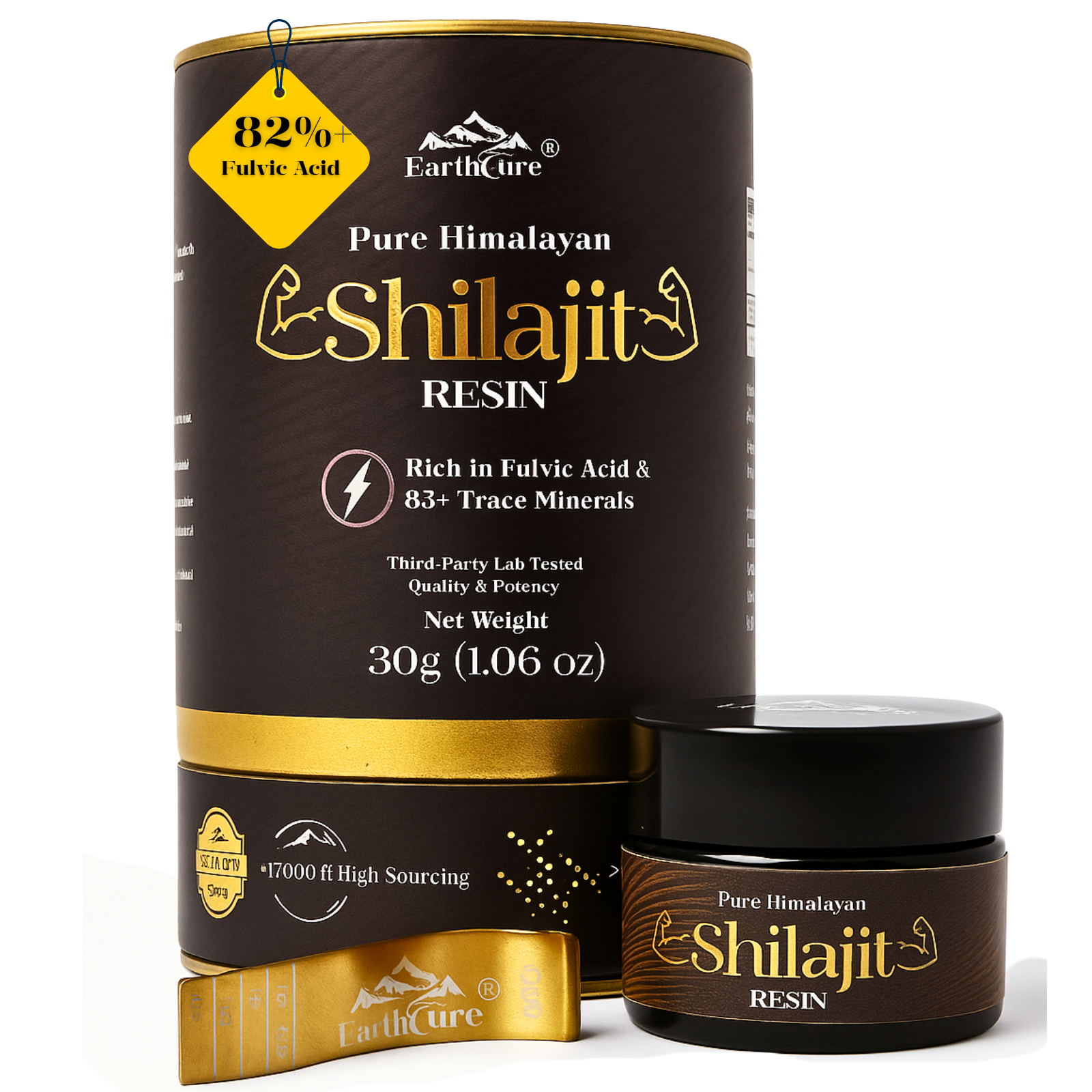
- EARTHCURE™ Pure Himalayan Shilajit Resin — a 30g amber-glass jar (around $39.99) of pure resin, with no powders, capsules, or fillers.
- 82% fulvic acid, Gold Grade, confirmed by USA third-party lab testing with a COA.
- Non-detect heavy metals, so you get the resin's minerals without the contamination risk careless sourcing can introduce.
- Single-origin, high-altitude Himalayan resin, chosen for its remote environment and documented tradition.
We chose Himalayan not because Altai resin is inferior, but because high-altitude Himalayan material lines up with the strongest research base, the deepest tradition, and the purity standards we hold ourselves to. See the details on our product page or buy directly on Amazon.
Frequently Asked Questions
Q: Is Himalayan shilajit better than Russian (Altai) shilajit?
A: Not automatically. Premium, lab-tested resin from either region can be excellent, while poorly processed resin from either can disappoint. Himalayan resin tends to come from higher altitudes and is the source most modern studies use, but the deciding factor should be verified purity and fulvic acid content, not origin alone.
Q: What is the main difference between shilajit and mumijo?
A: They are essentially the same type of mineral-rich resin viewed through different cultural lenses. "Shilajit" is the term used in the Himalayan Ayurvedic tradition, while "mumijo" (or mumiyo) is the name used in the Russian and Central Asian Altai tradition. Composition can vary by source, but the substance is broadly the same.
Q: Does Russian shilajit have less fulvic acid than Himalayan?
A: There is no reliable blanket number, because fulvic acid content varies by collection site, season, and purification method in every region. Be skeptical of exact percentages quoted for "Russian shilajit" without a batch-specific lab report. The only fulvic acid figure worth trusting is one backed by a third-party COA for that specific product.
Q: How can I tell if either type is high quality?
A: Look for pure resin form, a recent batch-specific Certificate of Analysis confirming fulvic acid content, heavy-metal testing within safe limits, and transparent sourcing. Physically, good resin is dark and glossy, softens with heat, and dissolves cleanly in warm water. These checks matter more than the mountain range it came from.
Q: Which type of shilajit is used in scientific studies?
A: Most peer-reviewed shilajit research uses purified Himalayan-sourced material, which is one reason Himalayan resin is so often referenced. Real examples include work by Pandit et al. (2016), Carrasco-Gallardo et al. (2012), and Stohs (2014). The overall evidence base is still developing, and shilajit remains a dietary supplement rather than a proven treatment.
Q: Why does EARTHCURE™ use Himalayan shilajit?
A: EarthCure sources single-origin, high-altitude Himalayan resin because it aligns with the strongest research base, the deepest documented tradition, and our purity standards. Each batch is third-party lab tested in the USA, verified at 82% fulvic acid, and confirmed to have non-detect heavy metals, with no fillers or additives.
Q: Is shilajit from either region safe to take?
A: Properly sourced, purified, and lab-tested resin from either region is generally well tolerated by healthy adults, but quality varies widely between products. Because unpurified shilajit can contain contaminants, third-party testing is essential. Always consult a qualified healthcare professional before use, especially if you are pregnant, nursing, taking medication, or managing a health condition.
Key Takeaways
The himalayan vs russian shilajit debate is real but often framed the wrong way. Himalayan resin is genuinely prized for its very high-altitude sourcing, its central place in Ayurveda, and its strong presence in modern research — which is exactly why it is EarthCure's source. Altai (Russian) mumijo is an authentic tradition in its own right and can be a fine choice when it is transparently sourced and lab-tested. Either way, judge any resin by its quality markers first: pure form, a batch-specific COA, safe heavy-metal results, and honest sourcing.
If you would prefer a Himalayan resin where the testing and transparency are already handled, explore EARTHCURE™ Pure Himalayan Shilajit — 82% fulvic acid, Gold Grade, and USA third-party lab tested — or pick up a jar on Amazon.
Medical Disclaimer: This article is for informational purposes only and is not medical advice. EARTHCURE™ shilajit is a dietary supplement and is not intended to diagnose, treat, cure, or prevent any disease. These statements have not been evaluated by the FDA. Consult a qualified healthcare professional before use, especially if you are pregnant, nursing, taking medication, or have a medical condition.